First and foremost, I am interested in and use Linux on a daily basis simply because it offers a good, reliable, robust, and long-term platform for both professional use and normal home use. But beyond that, I experience Linux and open-source as a symbol of freedom, personal choice, and independence. Linux gives me control, the flexibility to do what I want, and the ability to use a digital environment that suits me or that I can shape to my own liking. Linux makes personal computing truly personal again. And I assume there are many others who prefer to use Linux instead of the more mainstream operating systems, for the same reasons.
However, there are many domains, organisations, and governments at various levels that have traditionally always used mainstream operating systems and related applications such as office, communication, and collaboration applications, and have largely consciously kept their distance from Linux and open-source alternatives. Lately, however, I have been hearing, seeing and reading more and more about shifts within such entities from mainstream digital platforms and applications towards Linux and open-source-based solutions. More and more, we can read about local municipalities, government organisations, and even national financial institutions like central banks that are considering, or are even already in the process of, making a transition to Linux and open-source. So what’s going on? Why are these traditionally cautious and often inflexible organisations suddenly moving away from the usual proprietary platforms? What’s driving this change, and why now? In this article, I want to give some background on some reasons behind this growing trend, why governments are embracing Linux and open‑source software, and how transparency, digital sovereignty, and new EU regulations are pushing public institutions toward more open, future‑proof technologies.
Content of the article
- Introduction
- Digital sovereignty is becoming a serious priority
- The EU is actively encouraging open technologies
- Governments are already making the transition to Linux and open-source
- Why Linux and open-source matters
- Downsides of migrating to alternative technologies
- Final words
Introduction
What we see more and more is that governments at every level, local, national and international, are starting to reconsider their current and future digital foundations they rely on. And the reasons behind this shift seem certainly logical, because most public services world wide have moved to digital online services, so they have a growing need for transparency, long‑term control, and real independence.
Continuing to work with closed-source digital solutions offered by a relatively small group of big tech vendors is becoming more and more of a potential problem. Many governments are discovering that mainstream, closed-source solutions don’t give them the flexibility or insight they need to keep both their processes and their systems secure and future-proof. Linux and open-source software offer a powerful and independent alternative because this technology can be inspected, adapted to specific requirements, and maintained according to your own terms.
We live in a world where digital infrastructure is absolutely essential, but is controlled by only a handful of powerful companies that may also be influenced by foreign political interests. So, it is no surprise that governments everywhere are reconsidering their options. Open‑source solutions give them a way to stay independent, secure, and in control of their own digital future.
Digital sovereignty is becoming a serious priority
More and more countries are beginning to recognise that their digital infrastructure relies heavily on a very small group of global tech giants. And that dependence raises important questions. When a government builds its services on closed‑source software, it must simply trust that the vendor is handling sensitive data responsibly, is implementing strong security measures, and is not introducing updates that could conflict with national interests.
Open‑source software changes this entirely. Because the source code is openly available, governments or independent experts, can review it, challenge it, adapt it, and maintain it according to their own standards. There are no unexpected upgrades, no sudden licensing changes, and no pressure to migrate to a specific cloud platform just to remain supported. Instead, open‑source solutions offer long‑term control over the digital tools that power essential public services.
Linux fits naturally into this move toward digital independence. It is robust, stable, transparent, and developed by a global community rather than a single corporation with its own agenda. For governments aiming to strengthen their digital sovereignty, Linux and open‑source software provide a strong, reliable, and future‑oriented alternative.
The EU is actively encouraging open technologies
Here in Europe, the discussion around digital sovereignty is becoming more intense and more urgent every year. The European Commission has been actively encouraging the use of open standards and open‑source solutions within public administration, because these approaches support independence, transparency, and long‑term digital resilience.
Across the EU, there are numerous initiatives that focus on interoperability, open standards, secure digital infrastructure, and reduction of dependency on foreign big‑tech vendors. These initiatives do not explicitly say that everyone must switch to Linux or open‑source software, but when you look at the requirements, openness, transparency, long‑term support, data protection, and sovereignty, Linux and open-source is most likely the logical choice.
That is why we are seeing more and more public institutions experimenting with Linux desktops, open‑source office suites, and open‑source cloud platforms. And it is not just governments taking action, as different technology organisations are beginning to collaborate as well, like the Euro-Office initiative.
Governments are already making the transition to Linux and open-source
As I have mentioned earlier, the transition toward Linux and open‑source solutions is not only theory, it is actually happening. Across Europe, and in many other regions as well, ministries, municipalities, and various public institutions are introducing and integrating Linux and open‑source tools into their infrastructure and daily operations. These transitions are taking place step by step, sometimes starting with small pilot projects and sometimes through large‑scale migrations. Let’s take a look at some examples below:
France
France is probably one of the most active countries in Europe when it comes to adopting open‑source software. There are many examples showing how seriously the country takes moving away from mainstream, proprietary solutions. A well‑known case is the French Gendarmerie, which has been running Linux for years using its own distribution, GendBuntu, and has already migrated tens of thousands of desktops.
Several ministries and public agencies rely on LibreOffice, Linux servers, and a wide range of open‑source communication and collaboration tools. And more recently, on April 10, 2026, France announced an ambitious plan to migrate roughly 2.5 million government workstations from Windows to Linux, which is a huge step toward their digital independence.
The France central digital authority, DINUM, has requested every ministry and public agency to present an in depth transition plan before the end of 2026. And this plan is not only about swapping out an operating system. The planned migration impacts almost every layer of the government’s digital stack. Think of collaboration tools, security software, AI platforms, databases, virtualisation, and network infrastructure. A plan of this scale, which reimagines and rebuilds how a nation approaches technology and digital sovereignty, could easily inspire other European countries, and even governments worldwide, to reconsider their reliance on proprietary platforms from big tech vendors.
Germany
Germany is also making progress in the open‑source world with openDesk, a fully open‑source collaboration platform designed specifically for public institutions. Developed by ZenDiS, a government body dedicated to digital sovereignty, openDesk brings together a set of open‑source tools, including OpenProject for project and task management, into one secure, transparent, and easy‑to‑integrate workspace. openDesk is modular, flexible, and backed by a strong network of European partners who all share the same values around privacy, openness, and control over data.
One of the most inspiring examples of open‑source initiatives comes from Schleswig‑Holstein, Germany’s northernmost state. After publishing its Open Innovation and Open Source Strategy in late 2024, it became the first German state to officially commit to moving away from proprietary software entirely. Since then, it has migrated more than 44,000 government mailboxes, containing over 110 million emails and calendar items, to Open‑Xchange and the Thunderbird email client. Around 80% of its digital workplace has already transitioned to LibreOffice, and the state is now preparing to move all work laptops to Linux while adopting open‑source cloud‑storage solutions.
The Netherlands
This shift toward openDesk, as mentioned earlier in the previous Germany section, is not limited to Germany only. The International Criminal Court (ICC) in The Hague in the Netherlands recently announced that it will replace Microsoft products with openDesk. When an institution handling some of the world’s most sensitive legal cases chooses open‑source tools, it sends a strong signal that organisations that need security, transparency, and long‑term autonomy are increasingly turning to open source to achieve it.
Municipalities like Amsterdam and Haarlem have already adopted open‑source tools for collaboration and document management. The Dutch government also encourages this approach through its “Open by Default” policy, which promotes open standards across the public sector. Many agencies rely on Linux servers and open‑source platforms for long‑term digital archiving and public data access.
On top of that, four Dutch municipalities, ‘s‑Hertogenbosch, Zaanstad, Ede, and Amsterdam, have launched a pilot project to explore an autonomous digital work environment. They are testing a Linux workstation combined with MyDesk to reduce dependence on large software vendors and regain control over their digital infrastructure. The goal is to identify practical alternatives that better reflect public values like transparency and supplier independence. The pilot runs until the end of 2026, during which the participating municipalities will gather user feedback, test real‑world usability, and determine which groups of employees can transition first to this new open‑source working environment.
Italy
Also Italy has become an important example of how a country can embrace open‑source software solutions. It has a regulatory framework that says before any public institution buys software, they are required to run a technical and economic comparison in which open‑source solutions get priority. This is written into the Digital Administration Code. Italy’s national digital agency, AgID, also actively encourages public bodies to choose open‑source whenever it makes sense. But one of the most impressive examples comes from the Ministry of Defence, which migrated tens of thousands of workstations to LibreOffice. Several regions, including Emilia‑Romagna, also rely heavily on Linux servers and open‑source platforms to run public services.
But the story that really stands out is the FUSS project (Free Upgrade for a Digitally Sustainable School) in the Autonomous Province of Bolzano. This initiative has been running since 2005, which makes it one of the longest‑standing open‑source school projects anywhere. Even today, FUSS continues to power around 4000 Linux-based workstations and more than 60 servers across roughly 60 Italian‑language schools.
Another milestone is LibreDifesa, launched in 2015 through a collaboration between the Ministry of Defence and LibreItalia. This project migrated almost 150,000 workstations across all branches of the Armed Forces, like Army, Navy, Air Force, and Carabinieri, from Microsoft Office to LibreOffice and the ODF standard. It is the largest open‑source migration in Italy and the second‑largest in Europe, right after the French Gendarmerie.
Spain
Spain has also been making progress in the world of open‑source. One of the most well known examples comes from the City of Barcelona, which got international attention when it decided to end its contract with Microsoft and shift toward a Linux‑based, open‑source ecosystem. The reason lay in frustration with proprietary software, things like vendor lock‑in, limited control over data, and rising licensing costs. Eventually, the city decided to replace closed‑source tools with open‑source alternatives, from Linux servers to communication platforms.
Barcelona is not the only region in Spain taking open‑source seriously. The region of Extremadura has been a pioneer for years. It even created its own Linux distribution, LinEx, designed specifically for schools and public administration. It is an important example of how a region can shape Linux to fit local needs instead of the other way around.
Across the country, more regions have followed a similar path by adopting open‑source educational platforms and office suites. For example the Autonomous Region of Valencia, which developed LliureX, which is a localised version of Edubuntu. LliureX is installed on approximately 110,000 school computers throughout the region, making it one of the largest educational Linux implementations in Europe.
Belgium, Switzerland, Norway, Sweden
Also Belgium, Switzerland, Norway, and Sweden have built a strong foundation for using open technologies in government and education.
In Belgium, the main organisation shaping national open‑source policy is the Belgian Federal Public Service Policy and Support (BOSA). The federal government already uses open‑source tools for identity management, digital signatures, and public data platforms. BOSA’s DG DT team develops the middleware for Belgium’s electronic identity cards directly on GitHub, showing a real commitment to transparency and collaboration. Local authorities also benefit from IMio, which creates open‑source solutions that fit municipal needs and continues to support them long‑term. Even the Belgian police are moving toward open‑source web technologies, and the city of Gent has built an open‑source tool that helps residents calculate the energy efficiency of their homes. Many municipalities run their public websites on Linux servers and open‑source CMS platforms.
Switzerland has taken some major steps as well. The Federal Law on the Use of Electronic Means for the Fulfillment of Government Tasks (EMBAG) requires public bodies to release the source code of software developed for them. This has created a culture of technological openness across the country. Several Swiss cantons (a type of administrative division of a country) rely on Linux servers and open‑source educational platforms.
In Norway, public institutions make extensive use of Linux servers and open‑source cloud platforms. Schools in multiple regions run Linux‑based systems and open‑source learning tools. This gives students and teachers more flexibility and control over their digital environments.
Sweden has also embraced open‑source across many layers. Municipalities use open‑source solutions for public websites, communication systems, and IT infrastructure. Several public agencies rely on Linux servers for long‑term digital preservation. Sweden also actively promotes open‑source and open data through dedicated guidelines, agencies, and collaborative platforms. The Agency for Digital Government (Digg) leads these efforts, offering practical guidance on open‑source licensing, open data, and best practices. Digg publishes its own projects on GitHub, encourages public collaboration, and maintains portals like the Swedish Dataportal to support open data and community engagement.
European Union
When we talk about open‑source adoption in Europe, it is important to also look at what the European Union itself is doing. The EU has become one of the strongest forces pushing for open standards, digital sovereignty, and collaborative development across member states. A big part of this push comes from the Interoperable Europe Act, which encourages governments to use open standards and open‑source solutions so that public services can work together more smoothly.
Inside the EU institutions, the EU Open Source Programme Office (OSPO) plays a central role. It coordinates open‑source development, supports collaboration between teams, and helps ensure that the software used by EU bodies is transparent, secure, and reusable. The OSPO is acting like the EU’s internal hub for everything related to open‑source.
A European initiative that really got my attention is the Euro-Office project. This year, the Euro‑Office project is aiming to cut, and eventually to completely remove, the EU’s dependence on Microsoft Office in public‑sector digital workflows. This is a collaborative effort involving many organisations, companies, and open‑source developers who want to be part of a genuinely sovereign, European‑built office suit. And there is also Office EU, which is a full productivity environment based on Nextcloud Hub. It bundles files, email, calendars, chat, and document editing into one Europe‑hosted workspace. Office EU is a complete package of storage, communication, collaboration, and editing, that are all hosted and managed in Europe. Office EU has joined Euro‑Office as a contributor and helps to strengthen the open‑source editing ecosystem. Together, they form a stronger alternative than when they act individually. And if the initiative succeeds, it could become one of the most important open‑source milestones Europe has ever produced.
Why Linux and open-source matters
All across Europe, we can increasingly see the same developments in governments wanting more control over their digital foundations, more transparency in the tools they rely on, and less dependence on a single big vendor. And Linux and open‑source software makes that possible. The reasons are in my opinion clear: transparency, security, independence, long‑term sustainability, flexibility, and more predictable costs.
The great thing about open‑source code is that everyone with the proper skills can inspect the code, audit it, tweak it, and make sure it actually does what is required. That is different from closed‑source software, where you just need to trust that the vendor got everything right and isn’t collecting data in ways that don’t match national or international policies and agreements, like GDPR. With open-source, security teams can check the code themselves and verify compliance.
Further, there is the vendor lock‑in problem. With proprietary solutions, organisations often get stuck inside walled gardens, making it hard to switch tools or change direction. Linux and open‑source solutions give governments and related organisations the freedom to choose, customise, and avoid being tied to one supplier forever, because for example of open and thus transferable document standards.
And let’s not forget that with Linux, governments can keep technically working, but maybe older hardware in use for much longer. So, they can save money and reducing electronic waste at the same time. Throwing away working devices just because the OS has suddenly different requirements is wasteful and not necessary. With Linux, the technical upgrade cycle slows down a lot, and that’s better for budgets and the planet.
Downsides of migrating to alternative technologies
Switching an entire government or municipality to Linux and open‑source software can bring huge benefits, but based on my decades of experience with many migration projects within the organisation I work for, it’s definitely not a straightforward and simple job. Many public organisations still rely on old, Windows‑only, often custom-made applications that have been around for years, and updating or replacing them can take a lot of time, money, and effort.
In many cases, the original technical and functional documentation is incomplete or missing altogether, which makes things even more difficult. And of course, the practical work is often huge: migrating email systems, collaboration platforms, databases, and specialised software without interrupting essential public services.
Then there is the human side. Thousands of employees may need to learn new tools, adjust their workflows, and get comfortable with a new and different digital environment. Not every employer and employee is thrilled about digital change, so resistance and hesitation can slow the whole migration process down.
Governments also have to think about support, accountability, and building enough internal expertise to avoid simply trading one type of dependency for another. Also, everything has to meet national and maybe international standards, accessibility rules, and strict security requirements.
None of these challenges should be absolute deal‑breakers, but they do demand solid planning, clear communication, and realistic timelines and budgets.
Final thoughts
Governments are starting to choose Linux for the same reasons many of us individuals had or have: transparency, control, flexibility, independence and real digital freedom. The difference now is that these values are being recognised on a much bigger stage. As digital infrastructure becomes increasingly central to national policy and public services, more government bodies are seeing that Linux and open‑source software are not just handy tools, but are robust and reliable foundations for a secure, future‑proof, and independent digital governmental ecosystem. Instead of relying on closed, proprietary platforms, governments are beginning to build their long‑term strategies on open‑source technology stacks that they can inspect, adapt, and truly own.
Sources Used
The below sources have been used:
- https://commission.europa.eu/about/departments-and-executive-agencies/digital-services/open-source-software-strategy_en
- https://interoperable-europe.ec.europa.eu/interoperable-europe/interoperable-europe-act
- https://www.linuxfoundation.org/hubfs/LF%20Research/European%20Public%20Sector%20Open%20Source%20Opportunity%20-%20Report.pdf?hsLang=en
- https://interoperable-europe.ec.europa.eu/collection/open-source-observatory-osor/news/france-open-source-report-update
- https://cybernews.com/tech/europe-linux-open-source-digital-sovereignty/
- https://tech-insider.org/france-ditches-windows-linux-2-5-million-devices-digital-sovereignty-2026/
- https://www.openproject.org/blog/digital-sovereignty-government-germany-opendesk/
- https://interoperable-europe.ec.europa.eu/collection/open-source-observatory-osor/news/schleswig-holsteins-open-source-strategy-year
- https://vng.nl/nieuws/gemeenten-testen-autonome-digitale-werkplek
- https://tech-insider.org/france-ditches-windows-linux-2-5-million-devices-digital-sovereignty-2026
- https://lowtechlinux.com/2025/07/07/governments-around-the-world-are-switching-to-linux
- https://digitalnewsbreak.com/tech/france-replacing-windows-with-linux-2026
- https://italiancyberteam.it/2026/04/15/linux-and-open-source-in-the-worlds-governments-unprecedented-acceleration
- https://umatechnology.org/city-of-barcelona-kicks-out-microsoft-in-favor-of-linux-and-open-source/
- https://nextcloud.com/blog/press_releases/industry-initiative-launches-euro-office-as-true-sovereign-office-suite/
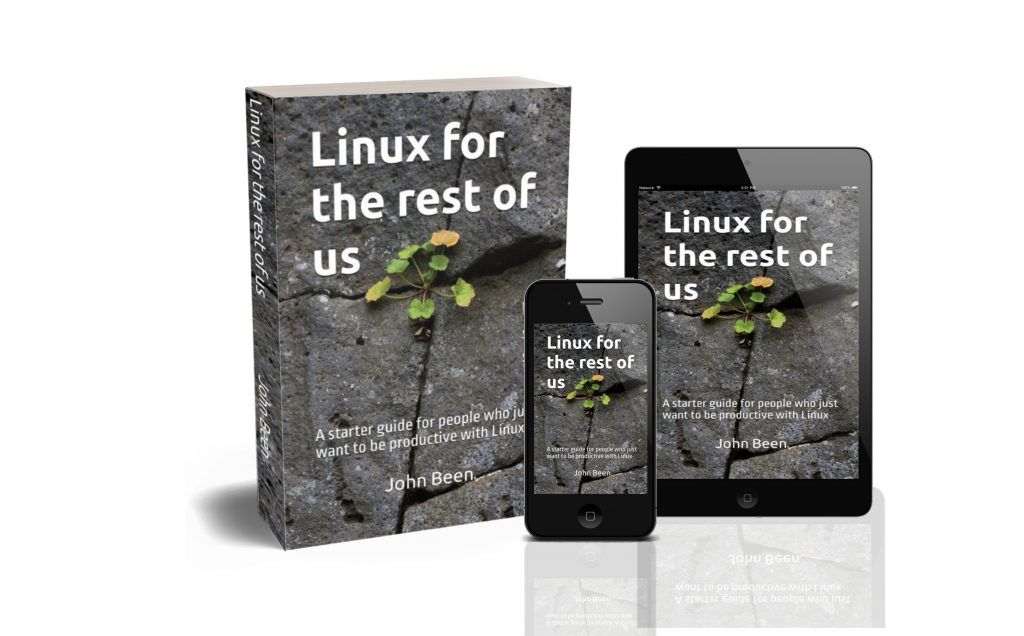
Have a look at my latest book on Linux, in Paperback or Kindle format.
For more info on my book click here.
When you want to buy the book click on the image below.
If you appreciate what I do on this website…,